conservation science

Posted in Conservation, Getty Conservation Institute, Getty Foundation, Paintings

Dürer’s Conserved Adam and Eve Unveiled at the Prado

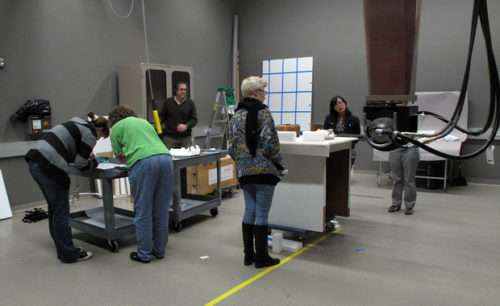
Conservator George Bisacca from the Metropolitan Museum of Art working on a panel. Image courtesy of the Museo del Prado

In 1507, German Renaissance painter Albrecht Dürer painted life-size figures of Adam and Eve, defining their forms with a fluid and continuous line.  These spectacular oil-on-panel paintings, which have just undergone a lengthy conservation, went on display again last week… More»

Also tagged , , , , , 1 Response
Posted in Art, Behind the Scenes, Conservation, Getty Research Institute

Career Profile: Albrecht Gumlich, Objects Conservator

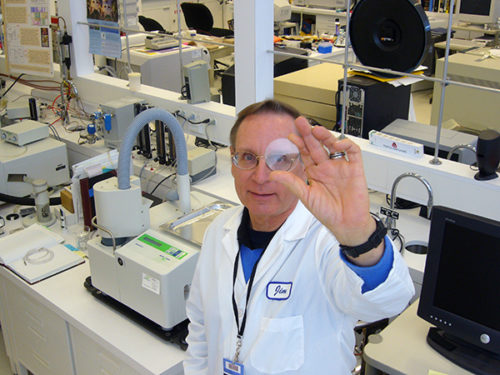
Albrecht Gumlich, objects conservator at the Getty Research Institute

What do you do at the Getty? I’m an objects conservator at the Getty Research Institute. The GRI houses a vast research library, with all sort of material relating to art history. Our special collections contain photographs, prints and drawings,… More»

Also tagged , , , , 1 Response
Posted in Conservation, Getty Conservation Institute, Research

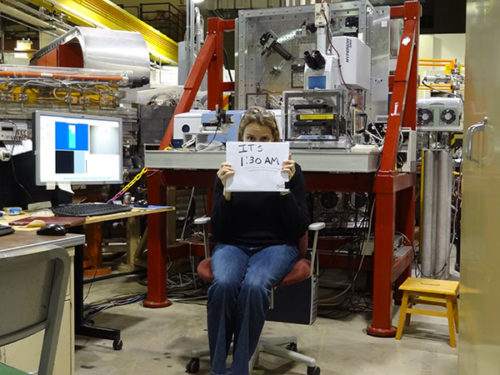
Ancient Greek Pottery Lends Its Secrets to Future Space Travel

XANES maps a) optical image showing black gloss (right) and coral red (left), b) distribution of Fe2+ species (measuring iron present in an oxidation state), and c) distribution of Fe3+ species (measuring specific minerals present).  Getty Conservation Institute

What do cutting-edge research into future space travel and the investigation of ancient ceramic pots have in common? More than you’d think. More»

Also tagged , , , , , , , , 1 Response
Posted in Art, Education, J. Paul Getty Museum, Sculpture and Decorative Arts

Question of the Week: Fake vs. Real—Does It Matter?

Cabinet, French, 1580 - details of the wood carving and metal ornaments

Question of the Week is a series inspired by our Masterpiece of the Week tours, offered daily at 4:00 p.m. Featuring an open and upbeat discussion among visitors and gallery teachers, the tours feature a new object and pose a… More»

Also tagged , , , , , , , , 11 Responses
Posted in Conservation, Getty Conservation Institute, Photographs, Film, and Video

Photographic History Smells Oh So Sweet

Le Cardinal d'Amboise, Joseph Nicéphore Niépce, (1765–1833), about 1826. Heliograph on pewter. The Royal Photographic Society Collection at National Media Museum

I’m always amazed when science can provide a new glimpse into the life and works of an artist who lived long before my time. It makes me feel closer to the artist’s intention to be able to understand how he or… More»

Also tagged , , , , , , , Leave a comment
Posted in Conservation, Getty Conservation Institute, Paintings

Inside the Getty Conservation Institute’s Modern and Contemporary Art Research Lab

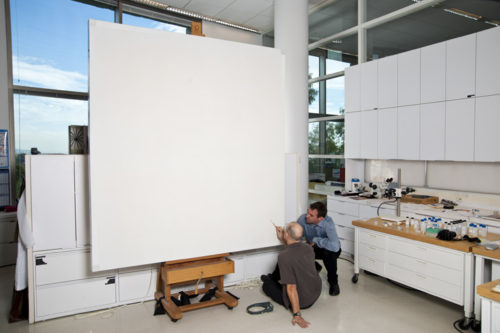
Local conservator Chris Stavroudis and GCI Senior Scientist Tom Learner work on a painting by artist Doug Wheeler.

I popped by the Getty Conservation Institute’s science labs this week to be met with a surprise:  a large white Doug Wheeler painting (1964, Untitled, acrylic) alongside the beakers and other scientific equipment.  Wheeler is best known for his neon… More»

Also tagged , , , , 4 Responses
Posted in Behind the Scenes, Conservation, Education, Getty Conservation Institute, Getty Villa

What’s Simmering in That Beaker? Understanding Ancient Technology by Manufacturing Pigments

Elizabeth Drolet filters mixtures of dye extracted from madder roots with different inorganic materials, such as alum, lye or chalk. The different inorganic materials used produce different shades of red.

Powdered saffron, simmering roots, crushed leaves…no, it’s not what’s cooking in the kitchen, but what’s been cooking at the Getty Villa this quarter for the UCLA/Getty Master’s Program in the Conservation of Archaeological and Ethnographic Materials. As part of a… More»

Also tagged , , , , , 4 Responses
  • Facebook

  • Twitter

  • Tumblr

    • photo from Tumblr

      myancientworld:

      hehasawifeyouknow:

      This could be my favourite Greek drinking vessel ever!

      ancientpeoples:

      Rhyton (Drinking Vessel) in the Shape of a Donkey Head

      c. 460 BC

      Greek, Attica

      This drinking cup could not have been set down without its contents spilling. It is fashioned after the head of a bridled donkey with a white muzzle, teeth, and ears. Like the naked satyr chasing a fleeing maenad on the vessel’s neck, the donkey belongs to the retinue of the wine god Dionysos. Douris, one of the great Athenian vase painters of first half of the fifth century B.C., decorated this amusing cup.

      Source: The Art Institute of Chicago

      In the morning, I’m making WAFFLES

      This cup has a built-in drinking game: it can’t be put down until empty.


      05/18/13

  • Flickr